
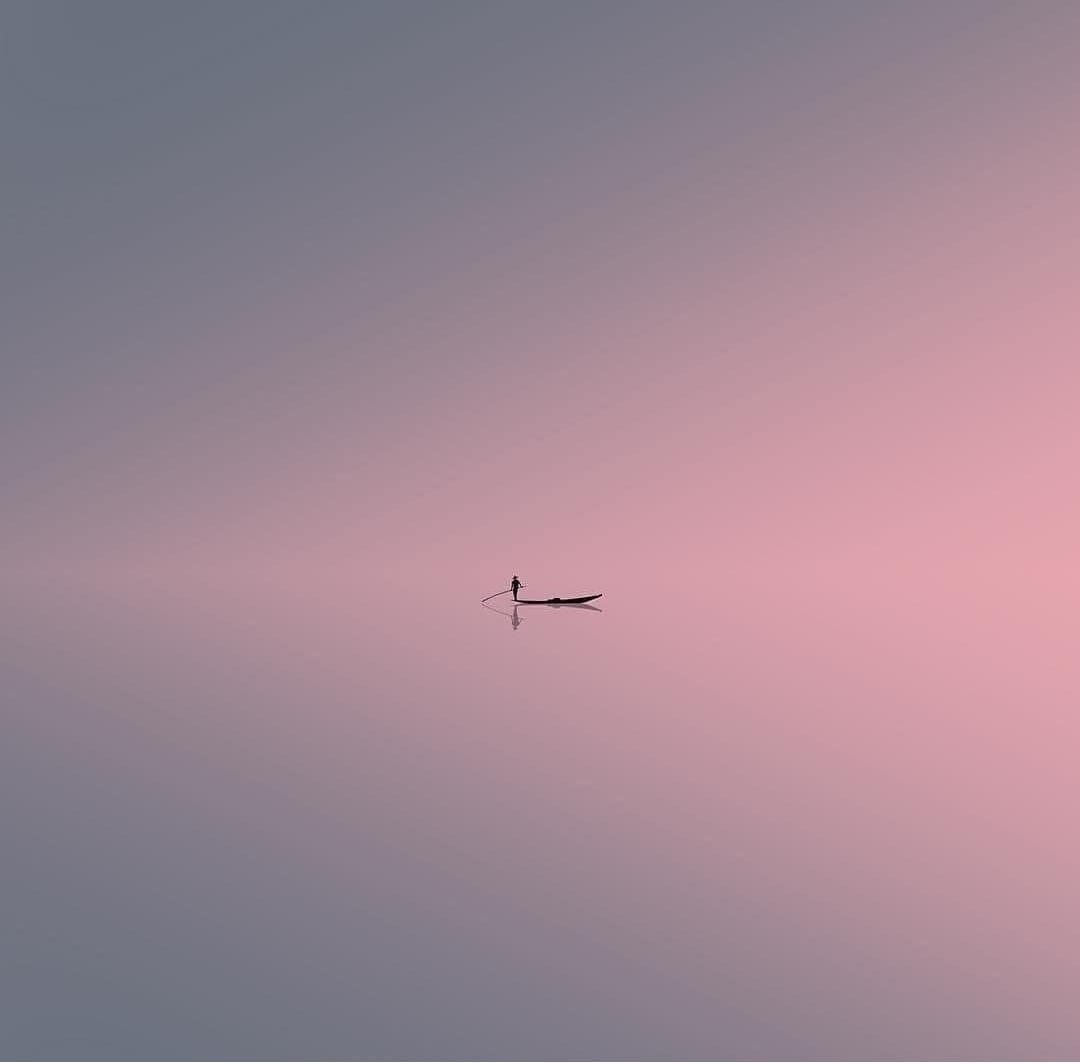
This past year I’ve learned a lot about the language of silence.
When we talk with others about our lives, our minds break down our lived experience into distinct fragments that correspond roughly to different parts of speech. Nouns and verbs mostly, with conjunctions, prepositions, adverbs and adjectives sandwiched in between. We bring the hammer and chisel of language to our world, shattering what was once whole and undifferentiated into shards we can grasp, reflect upon, and discuss with others.
The more words we use, the more distinctions we create, and by far the most important of these distinctions is the sense of an independent self who lives alone in the world. But this independent self is a mirage created by language. As Ludwig Wittgenstein observed, “the sense of a separate self is only a shadow cast by grammar.”
Evoking a moment of silence in conversation with others gives us a chance to put all these pieces back together again and return, if only for a moment or two, to the way the world existed and continues to exist before we started thinking and talking about it. Through our silence, we close the distance between ourselves and others by casting a light where once there was shadow.
One of the few benefits of the ongoing pandemic is that while it has forced us into an extended period of involuntary solitude, it has simultaneously driven home a recognition of the extent to which we depend on each other. We live and work alone but have never felt more of a need to be connected to friends and family. Our relationships to those closest to us have never felt more precious.
Within this context, silence serves as a language all its own. When we sit in silence with a friend, a family member, a colleague or a client, we communicate humility, vulnerability, and gratitude. We invite our companion to share with us the deepest form of human connection – a bond that exists prior to thought and language. Silence connects us to what we have in common as human beings as opposed to what sets us apart.
Words distinguish us, while silence unites us.
Several years ago, while attending a silent retreat, I came across a quote by the late Irish poet and theologian John O’Donohue that the retreat organizers had taped to the door of the meditation hall:
“One of the tasks of true friendship is to listen compassionately and creatively to the hidden silences. Often secrets are not revealed in words…they lie concealed in the silence between the words or in the depth of what is unsayable between two people.”
As we prepare to rejoin our communities in person, we might use the occasion to reconsider the way we think about silence. We might think about silence not as a lack of communication, interest, or engagement, but instead as a way of communicating with others in those extraordinary moments when there simply are no words – when there’s more to be said than language can convey.
 Fridman Associates